


Last month we benchmarked 16 LLMs on data discovery and data visualization. Then, a few days later, Google announced Gemini 4 Argon. It wasn't initially available to everyone, but last week it landed in Google Cloud and also OpenRouter. So we couldn't resist running it through the same data analysis test.
Everything is the same as last time: the same simulated experiment dataset (eight versions of a product landing page, ten weeks of daily funnel counts), the same prompt, the same single API call to OpenRouter, and the same six scoring criteria.
If you'd like the details on how the dataset was built and how we score, the original post has the full story.
How Argon did
Argon took 5 minutes and 4 seconds and cost $0.31. It returned a clean HTML report as instructed. You can see it yourself here.
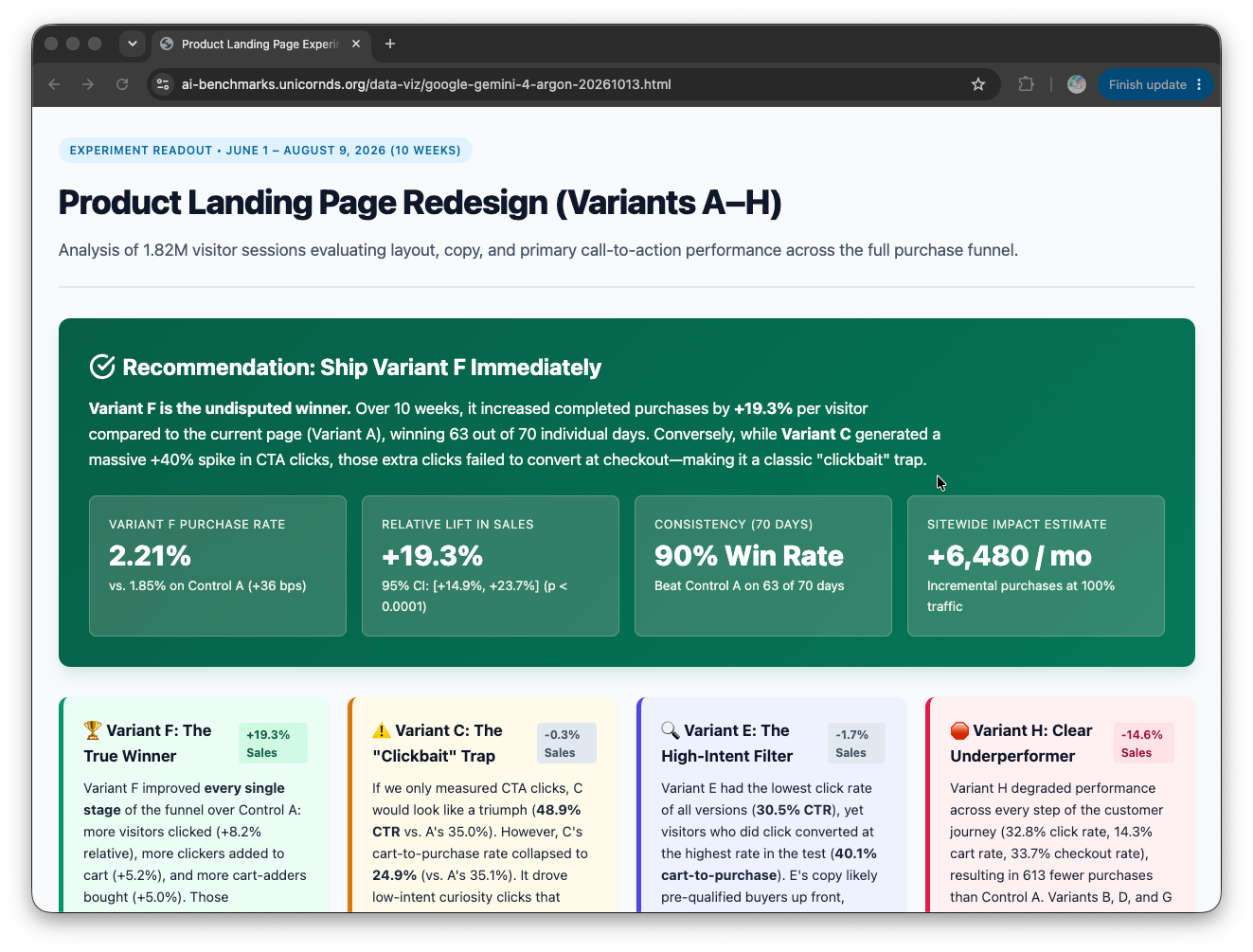
As an analyst, Argon did pretty well. It found every pattern we built into the data. That includes the subtle one: a variant that gets the fewest clicks but converts the best once people add something to their cart. Argon even featured this observation in its own card: "The High-Intent Filter". Until now, only Claude Opus 5.5, Claude Opus 5, and GPT-6 Astra had caught all of the planted patterns. And Argon is the first Gemini model to achieve this.
Argon vs Claude Opus 5.5
Opus 5.5 was our top pick last time, so the real question is whether Argon has caught up.
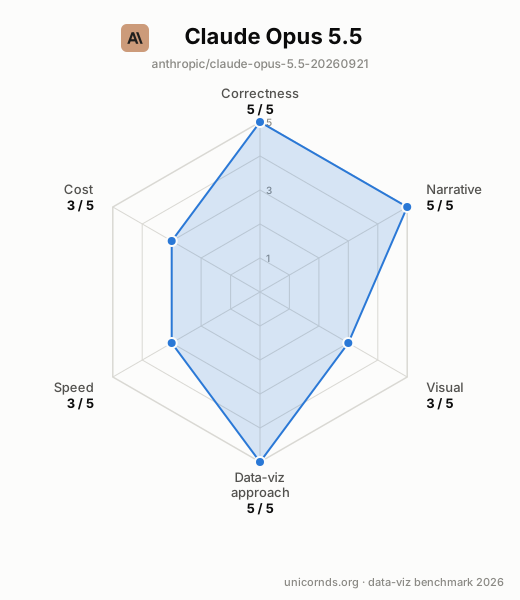
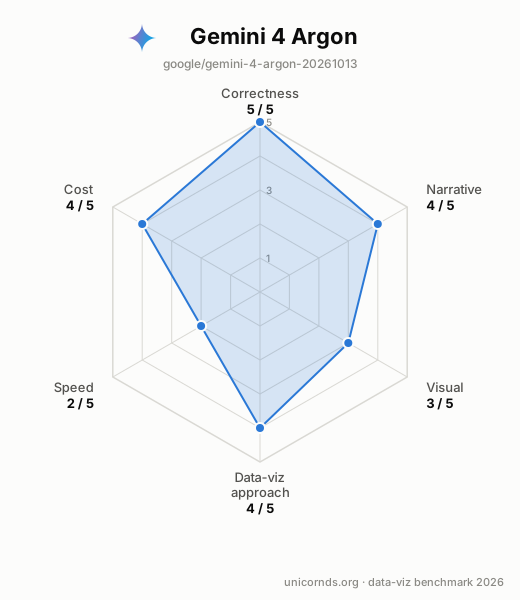
Claude Opus 5.5 (left) and Gemini 4 Argon (right). Similar shape, with Opus a little bigger on narrative and data-viz approach. You can see Opus 5.5's report at https://ai-benchmarks.unicornds.org/data-viz/anthropic-claude-opus-5-5-20260921.html.
| Claude Opus 5.5 | Gemini 4 Argon | |
|---|---|---|
| Correctness | 5 | 5 |
| Narrative | 5 | 4 |
| Data-viz approach | 5 | 4 |
| Visual | 3 | 3 |
| Time | 4:41 | 5:04 |
| Cost | $0.69 | $0.31 |
On finding the insights, the two models are both good. But there are differences in the details.
Argon's charts are right, but some of its sentences drift. Argon pasted the full dataset into the page and computes every chart and table from it, so those numbers are exact. However, the numbers written into the text can be off. It doesn't change the story, but a diligent reader can spot these inconsistencies.
In comparison, every number in the Opus 5.5 report matched our answer key. So with Argon, spot checks are still warranted. It is <50% the cost of Opus 5.5 though.
Where Argon lands
On report quality (correctness, narrative and data-viz approach combined), Argon joins Opus 5.5 and 5, as well as GPT-6 Astra in the top tier, while being the cheapest of the bunch. There are certainly cheaper and faster models, but those also tend to do worse with analytic capabilities.
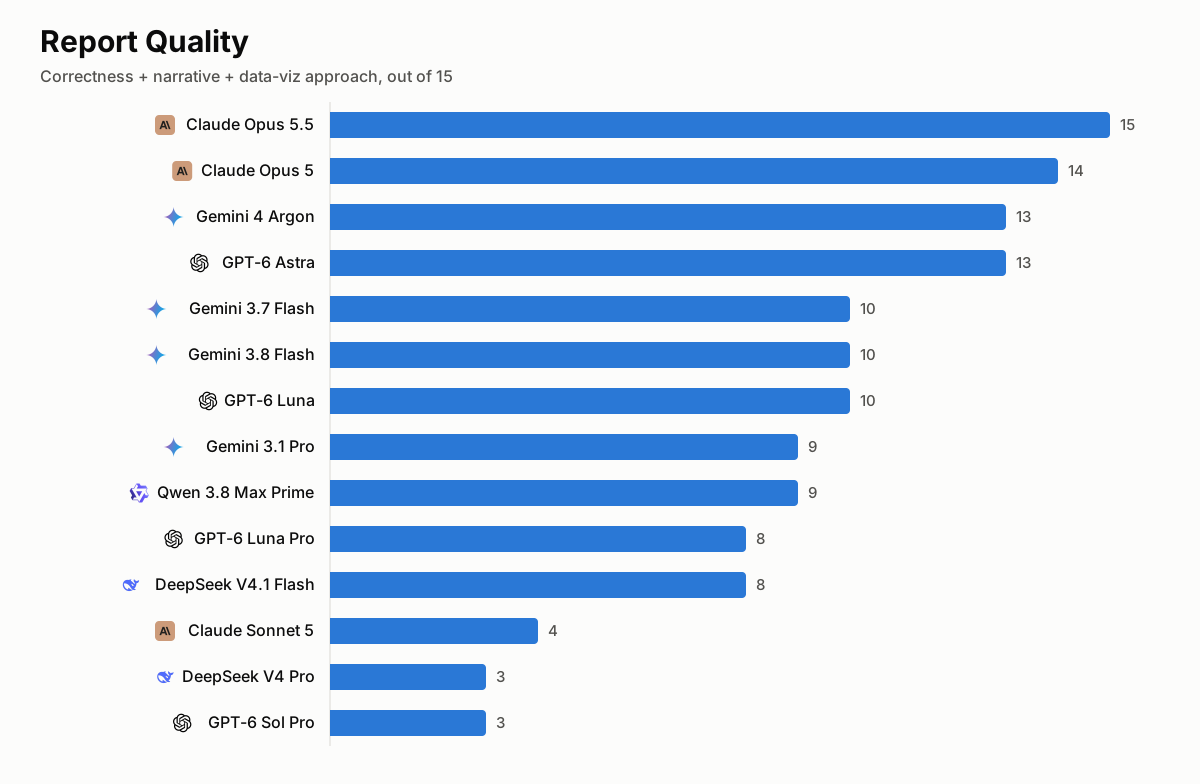
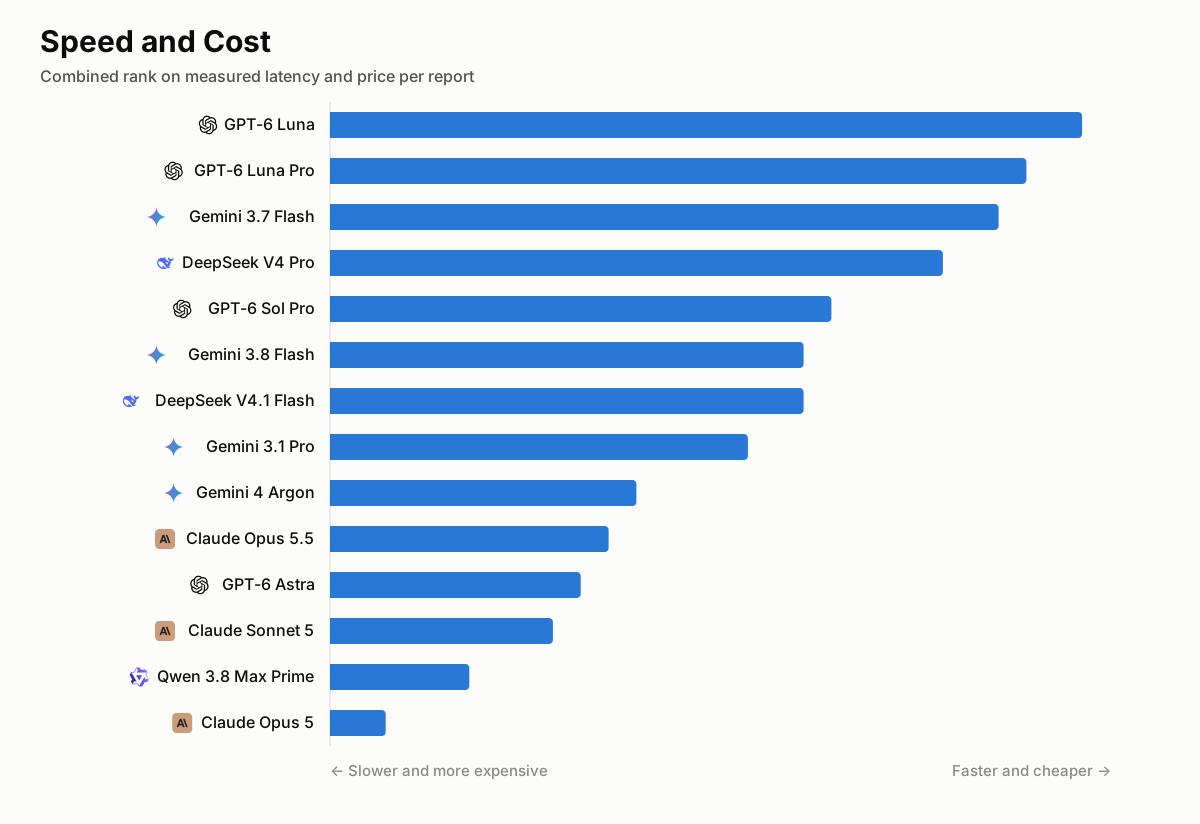
And on looks, Argon comes in third, behind the two Gemini Flash models. Gemini now holds the top three spots for visual appeal. Gemini 3.7 Flash continues to be the only model generating a dark mode report, and as a dark mode devotee, I'm biased.
Here is my own very subjective ranking on visual compellingness of the reports (top 10). You can also judge them yourself.
- Gemini 3.7 Flash - https://ai-benchmarks.unicornds.org/data-viz/google-gemini-3-7-flash-20260813.html
- Gemini 3.8 Flash - https://ai-benchmarks.unicornds.org/data-viz/google-gemini-3-8-flash-20260902.html
- Gemini 4 Argon - https://ai-benchmarks.unicornds.org/data-viz/google-gemini-4-argon-20261013.html
- Claude Opus 5.5 - https://ai-benchmarks.unicornds.org/data-viz/anthropic-claude-opus-5-5-20260921.html
- GPT-6 Astra - https://ai-benchmarks.unicornds.org/data-viz/openai-gpt-6-astra-20260903.html
- Claude Opus 5 - https://ai-benchmarks.unicornds.org/data-viz/anthropic-claude-opus-5-20260723.html
- GPT-6 Luna Pro - https://ai-benchmarks.unicornds.org/data-viz/openai-gpt-6-luna-pro-20260922.html
- DeepSeek V4.1 Flash - https://ai-benchmarks.unicornds.org/data-viz/deepseek-deepseek-v4-1-flash.html
- GPT-6 Luna - https://ai-benchmarks.unicornds.org/data-viz/openai-gpt-6-luna-20260922.html
- Gemini 3.1 Pro - https://ai-benchmarks.unicornds.org/data-viz/google-gemini-3-1-pro-preview-20260219.html
Wrapping up
With Argon, Google joins the top tier for data analysis. It found everything we hid in the data, and it did so pretty economically. It also makes a decently good looking report.
That said, if you're already using Opus 5.5, we didn't find a strong reason to switch. Opus still writes the more reliable report. But if you are already on Google's stack, having Argon around is a powerful addition.


