


If you've been following the AI agent space, you know how fast things are moving. With so many frameworks launching, pivoting, and competing for adoption, it's hard to know where to invest your precious time. If you are planning to build a new agentic system, the framework choice can be especially daunting.
Today, let's try to cut through the marketing noise, and look at how people have been voting with their pip and npm installs.
We've Seen This Before
Today's agentic landscape reminds me a lot of the 2010s web framework era. Back then, we had Angular, Backbone, Ember, and then React. Some were backed by big companies (React by Facebook; Angular by Google), others were more grassroots efforts. Among developers, it was a running joke: "X days since a new JavaScript framework launched."
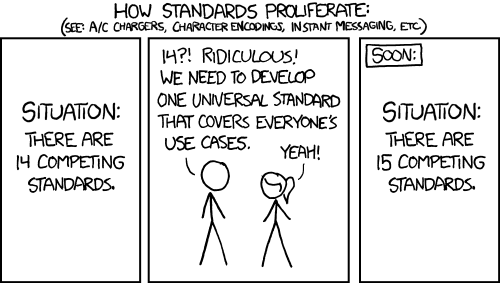
Looking back from 2026, it almost feels puzzling how chaotic the web framework ecosystem was back then, now that React has emerged as the clear winner. But if you were a web developer during the 2010s, the pain was real. Every framework had a slightly different abstraction model. None solved all problems. Even React, today's winner, was woefully insufficient at the time. Companion libraries like Redux had to be built to solve the core state management problem.
We're seeing very similar patterns play out now with agentic frameworks. So how to pick a winner? Let's look at the data.
The Current State: By the Numbers
For this analysis, we pulled two years of download data from PyPI (via Google BigQuery) and npm. Weekly downloads aren't a perfect proxy for adoption, and say nothing about framework quality. But they're the closest thing we have to watching developers vote with their code.
There are also many, many, many agentic frameworks out there. For the sake of noise reduction, we are showcasing the most popular choices at this moment.
For most agentic libraries, we look into their python SDK installs, as python remains to be a highly productive and popular language for the AI era (continuing from the ML days). However, there is an exception. Anthropic is a Javascript / Typescript shop, and while python libraries are always available for their LLM SDK and also agentic SDK, not considering npm installs would be quite misleading. Other agentic libraries also tend to support languages other than python, but python tend to represent the majority of downloads.
Observations
- LangGraph's early mover advantage: from the makers of LangChain, it leads at ~14M weekly downloads, with steady growth since mid-2024.
- Pydantic AI is seeing a momentum surge: growing from zero in late 2024 to currently ~10M weekly downloads, catching up with the leader of the pack.
- Claude Agent SDK, OpenAI Agents, Google ADK all launched in mid-to-late 2025 and have been growing rapidly.
- Speaking of Google ADK, it recently saw a +175% week-over-week growth, possibly attributing to the official v2.0.0 release.
- Smaller players are getting squeezed out: pyautogen (Microsoft's AutoGen) went into maintenance mode last month. DSPy, despite the Stanford academic credential, declined from 348K to 182K. Visual builders like n8n have seen downloads drop 40-60%. The gap between leaders and the rest is widening.
Choosing a Framework
With the landscape shifting this fast, there's no single "right" answer that will age well. But here's how we'd think about it today:
If you're new to backend development
Go with Google ADK. For those who haven't built API services or worked with databases before, ADK provides more batteries-included infrastructure. It handles deployment, logging, and monitoring out of the box through Google Cloud, so you can focus on the agent logic rather than the DevOps.
Experienced Python developer?
Go with Pydantic AI. If you've built web services before - APIs, databases, the whole stack - Pydantic AI will feel natural. It's built by the Pydantic team with the same philosophy: excellent type inference, minimal boilerplate, and no magic. It's the fastest-growing framework for a reason: experienced developers can be productive on day one, without the distraction of unnecessary add-ons.
Committed to a specific model provider?
Use their SDK. Does your company use Claude? Then go with the Claude Agent SDK. Or maybe your team have enterprise agreements with OpenAI? Then pick OpenAI Agents SDK. The provider SDKs are designed specifically for their model's strengths - Claude's long context and reasoning, GPT's tool ecosystem, Gemini's multi-modal capabilities (for Google ADK). You'll get better ergonomics.
What about LangGraph?
LangGraph's graph-based approach is powerful for complex multi-step workflows, but it comes with a learning curve and the LangChain dependency adds weight. If you're already in the LangChain ecosystem, it's the path of least resistance. If you're starting fresh, we'd suggest considering the options above first. Keep in mind: you should only introduce complexity as the use case requires it. Many problems can be solved with just a single agent with clear instruction and relevant tools - don't jump right into a network of agents.
The Big Picture
If there's one lesson from the web framework wars, it's this: the winners are rarely the most feature-complete – they're the ones that reduce friction while staying adaptable. Developer experience matters. The best framework is the one that helps you ship agents that people want.


